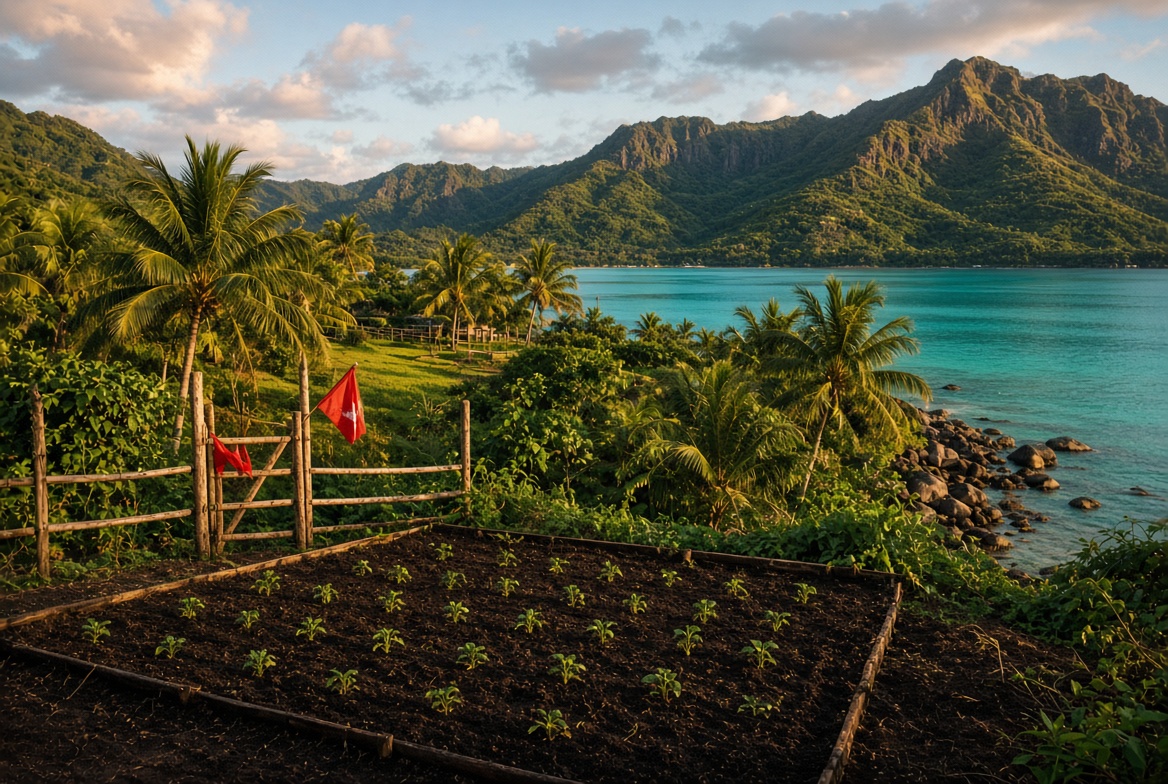
The plants are grown on SwissX SoilBooster. The footprint is recorded from seed to sale.
Two medicines, often confused
Homeopathy is a European system. Samuel Hahnemann published the Organon in 1810: like cures like, and doses diluted past the point of chemistry. British colonial doctors later carried homeopathic kits into the West Indies. That is a real nineteenth-century traffic. It is not the tradition that raised Antiguan children.
Bush medicine is the fusion that actually lived here. Kalinago and earlier island knowledge was broken by colonisation and disease. What remained was rebuilt by Africans brought across the Middle Passage, who knew simples, and by generations born on the estates who learned which hedge answered a fever. Colonial writers often filed that knowledge under obeah, because a person who knew herbs had standing.
1788: they knew the simples
A report to the British Parliament that year took evidence on Antigua. Mr Hutchinson described obeah-men as people “better acquainted with the Qualities of Herbs, and having a more perfect Knowledge of the Nature of Simples, than the rest.” Dr Adair said the offices of soothsayer and physician were usually distinct, and that the arts seemed to come from Africa because the reputed practitioners were generally born there. Read the hostility as the frame. The fact underneath it is plant knowledge concentrated in certain hands, on this island, before Victoria.
1886: a doctor writes the plants down
On 8 May 1886 the British Medical Journal carried a letter from George E. Pierez, “Medicinal Plants of Antigua.” Victorian medicine was cataloguing the hedge. It was not publishing a homeopathic repertory. The plants were already in use; the journal was late to them.
The leaf in the national list
Antigua and Barbuda’s FAO country report lists plants used traditionally for medicinal purposes. Soursop, Annona muricata, is there as a tea to induce sleep, and as a bush boiled to bring on perspiration and so reduce fevers. Fever grass — lemongrass, Cymbopogon citratus — is the cold-and-chill tea. Aloe for burns and hair. Christmas bush, cattle tongue, in the midwife’s nine-day bath after birth. The comfort oil sits in that soursop line: the night leaf, carried now in coconut oil rather than a cup.
The natural wonder, without the brochure voice
Antigua is low, dry on the windward scrub, wet in the Shekerley hills. The Atlantic cuts arches in the limestone. Devil’s Bridge is that cut, still working.
Nelson’s Dockyard is UNESCO World Heritage: a Georgian dockyard in a hurricane hole. The island has always been a crossroads, not a closed garden.
A frigatebird colony, pink sand, a different silence. One state, two natures.
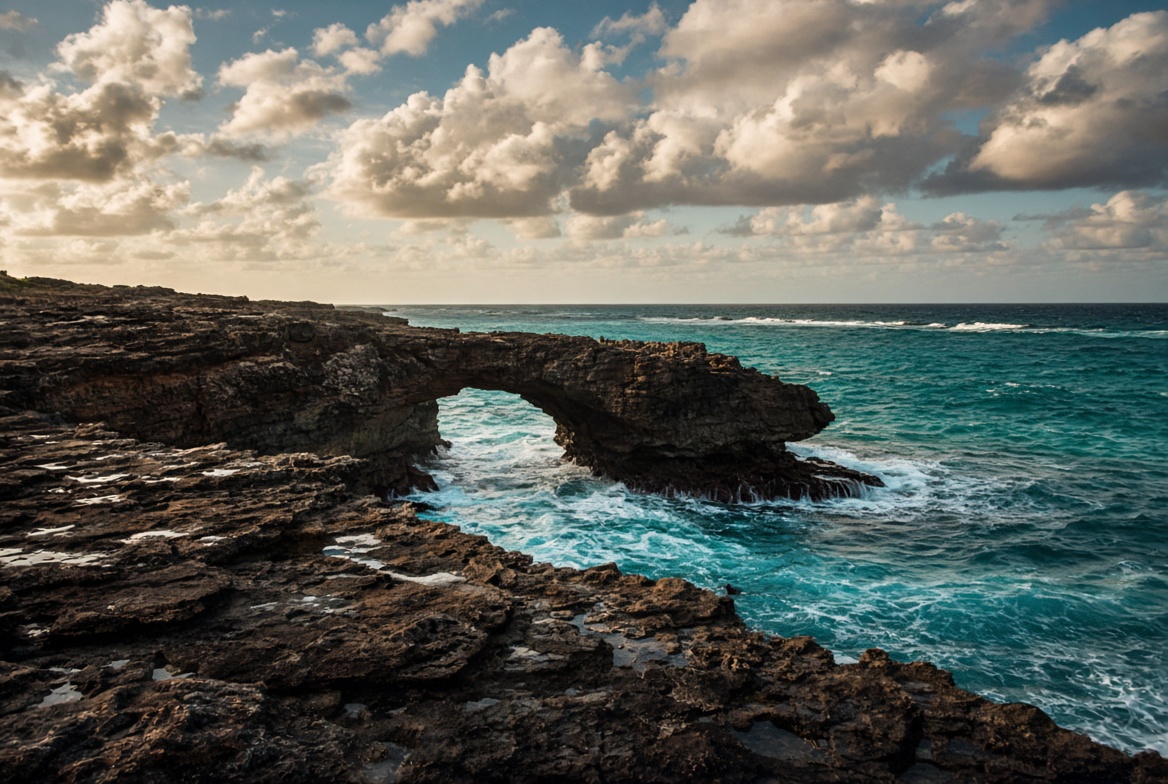
The tourist line is 365 beaches. Some of that is marketing. The true wonder is narrower and better: a small island with a rainforest road, a dockyard, a limestone coast, and a hedge that still answers a kettle.
Sargassum landing on that coast is the other wonder, the difficult one. SwissX Island turns recovered weed, coconut, neem and farm manure into SoilBooster. The comfort oil is the kitchen and the skin of the same place. Different bottle. Same island.
The oil is produced in Antigua and Barbuda. The shop that sells it is the island shop.